How to maintain your fire doors
Why maintain your fire door?
Unfortunately, installing a fire door does not mean that it is going to remain in top condition forever. Fire doors need maintenance to make sure that they are still in line with fire safety regulations and are ready in the event of a fire.
Fire doors in high traffic areas may need to be checked over more often to ensure that damage has not occurred due to heavy use and accelerated wear and tear.
How to maintain fire doors?
There are several steps that you can take to make sure that your fire doors are equipped in the case of a fire emergency.
Clear areas
It is important that the areas surrounding a fire exit door are clear to allow for easy entry. Not only can clutter advance the spread of fire, but it can also negatively impact access to your exit point. Making sure that not just one but both sides of your exit are clear so that in the case of emergency an exit can be made quickly with minimal disruption.
Clear fire exit signs
If a door is being used as a fire exit then it is essential that the door is marked with a fire exit sign. It is important to make sure that these signs are clearly visible so that occupants can clearly make out fire exits in the case of emergency.
Cleaning
When maintaining a door you need to clean it - keeping the door, the frame, hinges and hardware free of dust and debris is key. It ensures that there is no unnecessary damage or wear and tear to your door. While cleaning, it is also worth lubricating the hinges, latches and self closers to make sure that they continue to operate smoothly.
Inspecting fire doors
Damage and wear and tear are hazards to any door, but when it comes to a fire door it is essential to consistently inspect to make sure that everything is in good working order.
Why inspect a fire door?
Fire doors should be inspected to make sure that they are still effective and will be most beneficial in the case of a fire.
It is important to make sure that fire doors still meet all health and safety legislation - especially if they are a key risk mitigator in a risk assessment. Making sure that a fire door is still capable of holding back a fire to give occupants a safe escape route is essential. To keep track of this, inspections should be performed on hinges and latches and all other parts of the door.
Identifying issues such as damage or wear and tear early on can make it considerably easier to repair a door before these problems become worse and unfixable.
How to inspect a fire door?
It is typically recommended to inspect fire doors and fire exit doors every six months. There are several steps involved in inspecting your doors:
The Door Frame
Door frames should be thoroughly looked at for any signs of damage or wear - they should be secure and there should be no gaps between the door frame and the wall. If smoke could pass through a door frame, then fire can too, so making sure that the frames are solid is essential.
The Door Leaf
The door leaf is the main section of your door. Examining this for any visible damage such as cracks, warping or changes to the shape or even holes, is an important part of your inspection. You should also ensure that while inspecting this, both sides of the door are free from obstruction.
The Door Seals
Make sure that while checking your door you make sure that the seals are still intact. The door seals are found around the edge of your door, if there are any damaged or missing sections these will likely need to be replaced. The seals in fire doors are essential for stopping the spread of fire in case of emergency, so making sure that these are in good working order is crucial.
The Hinges
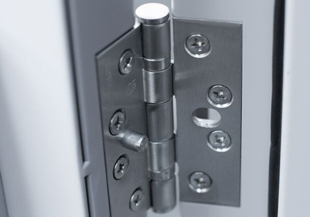
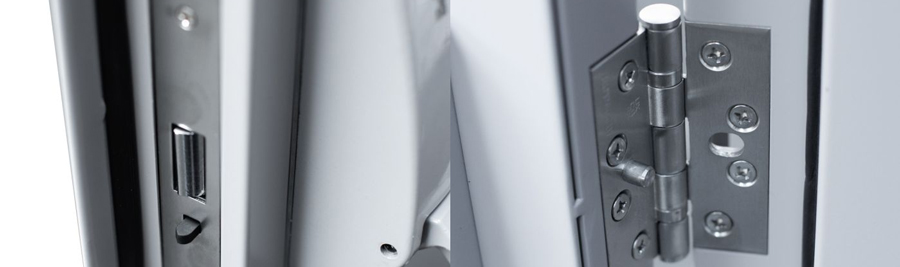
Typically, a fire door will have three or more hinges. When inspecting your door it is important to make sure that they are securely fixed and also free from damage or excessive wear.
The Door Closers
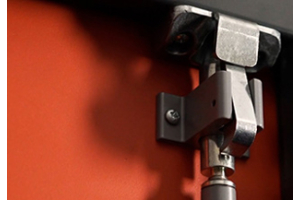
Fire doors will usually come with a self closing device which ensures that the door shuts firmly without needing to be pushed to engage the latch. While you're inspecting your door you should make sure that your door is able to close securely from any position without needing manual assistance.
The Latch
While checking your door closers, you should also check that your latch is in good working condition. This involves making sure that it operates smoothly without it sticking or difficulty when opening, and that when the door is shut the latch is firmly in place.
The Door Gaps
You should make sure to measure the gaps around your door. Typically at the bottom of your door anything up to a 10mm gap should be okay, while at the top and the sides 3mm is generally the maximum sized gap. It is important to make sure that the gaps do not exceed these measurements as smoke or fire could pass through.
Recording
Once you have completed the inspection of the door, recordings should be documented. If there are any areas of concern found during your inspection, these should be promptly repaired.