Fire-Rated Doors VS Fire Exit Doors

Fire rated doors and fire exit doors are essential fire safety features in many buildings. They are designed to protect occupants and help to mitigate the damage and risk in the case of a fire.
Although both doors are critical in situations of fire, their exact functions differ. This guide explains how they differ and in what situations each door is designed to perform for.
The purpose of each fire door
The main difference between fire rated doors and fire exit doors is their purpose.
A fire rated door is designed to slow the spread of fire and smoke within a building. They can be used to protect critical escape routes and reduce fire damage. Their role is to compartmentalise a building and isolate fire to specific areas for a specified period of time - from 30 to 120 minutes, depending on their rating. By containing fire, fire rated doors work incredibly well as internal fire doors that allow evacuation routes to remain safe for longer so that people can leave buildings and emergency services have time to respond.
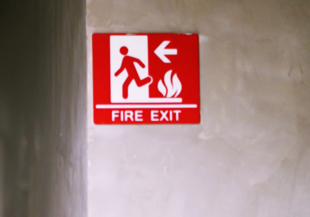
In contrast, a fire exit door is designed for swift evacuation. A fire escape door leads to a safe external area or assembly point. They must provide a clear, unobstructed route for people to escape a burning building - the primary purpose is to allow people to leave a building quickly and to minimise the risks posed by smoke inhalation or structural failure.
While a fire rated door focusses on containing fire, a steel fire exit door is all about allowing people to exit a building quickly in the case of an emergency.
Regulations
In the EU and UK, fire-rated doors and fire exit doors are subject to different regulations, reflecting their distinct purposes.
Fire rated doors are tested and certified to ensure that they meed specific fire resistance standards. These standards measure how long a door can resist fire for - these ratings are represented with FD followed by the number of minutes a door can hold back fire for. So, for example, an FD60 door would be certified to hold back fire for 60 minutes. A doors certification means that the door has been rigorously tested to ensure it can hold back fire for that amount of time.
Fire exit doors on the other hand follow regulations that focus on safe and efficient evacuation. The main standard for fire exit doors in the UK is EN 1125, which lays out the requirements for panic hardware to ensure that doors can be easily opened by anyone in an emergency. All steel fire exit doors must remain unlocked from the inside during business hours to allow for immediate evacuation.
The building regulations, Part B (fire safety) also provide fire regulations on the number, placement and other specifications for fire exit doors in both new and existing buildings.
Maintenance
Both fire rated doors and emergency exit doors require proper maintenance to ensure that they function correctly in the event of a fire. Regular inspections are required to verify that fire rated doors are intact and that their hinges, seals and closers are in good working order. Any damage to a fire rated door can reduce its effectiveness in the case of a fire. It is advices that you follow a guide on how to maintain your fire doors, and perform regular inspections.
In the UK, the regulatory reform (fire safety) order 2005 places the responsibility on building owners or 'responsible persons' to make sure that fire safety measures, including fire doors and emergency exits are are properly maintained and compliant. Failure can result in legal penalties as well as increased risk to occupants in the case of a fire.